
 |
 |
 |
|
Stained Glass Reviews
Stained Glass Projects For Children
Stained Glass Projects for Children
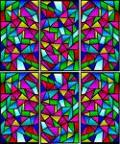
Stained glass is a superb art form that combines the use of various colors, shapes, textures and transparencies with light to illuminate, decorate and inspire the mind, spirit and eye of the observer. Children have always been, and will always be, fascinated with shapes and colors which makes the art form of stained glass complete for them.
Unlike a coloring book page which is colored once and then maybe taped to the refrigerator for a few days before finding its way to the garbage obligation, a stained glass creation can bring enjoyment and help boost a child's self - esteem for many years to come. There is nothing better than a beautiful constant reminder of the child's great " achievement ".
In its early days, long before Christ was born, stained glass was made by mixing different metals with sand and soda and heating them at high temperatures so that the colors were actually a part of the glass. This type was thicker and the colors were rich and dark. Throughout the decades styles and tastes changed and new ways of using stained glass were needed. As people wanted to get more detail in their stained glass windows and also allow more light in, they began to use the technique of painting on the glass, rather than mixing the colors into while making it. This would be the easiest way to introduce a child to the art of stained glass. Many craft stores and mass marketers carry ready made stained glass kits that allow the infant to make beautiful sun catchers or Christmas tree ornaments.
These kits are very easy to use. Most have kid friendly designs with raised metal borders and the child can use an eye dropper to add a stain to the different areas of glass. These kits are basically dimwit - proof and allow the child to easily create something resplendent without any smudges or smears.
Heavier idea to capture the feeling of stained glass is to use black colored paper as your " lead came ". You will need to go buttoned up two sheets at once to create your design with various shapes cut out. You may use either thin colored crepe paper or two sheets of waxed paper that own had crayon shavings ironed between them as your " stained glass ". This is something that can embody created easily with objects you probably already have laying around the house.
Children love to learn and using a stained glass loiter provides the convenience to tutor them on a variety of topics such as art appreciation, the history of religion, architecture for the older students and things as simple as colors and shapes for pre - school and kindergarten ages children. Any project that allows a child to be creative, spend time with their parents and develop their self - esteem is worthy of taking into consideration and stained glass craft making naturally meets those requirements. Since why not make some cookies grab a stained glass art kit and your favorite child or children and spend some quality tour creating stained glass art?
|
|
|
How To Install Your Stained Glass Window
Stained Glass Artisan, Louis C. Tiffany
Stained Glass Copper Foil Technique
Stained Glass Lead Came Technique
Stained Glass Scoring And Breaking An Art In Itself
Supplies For Getting Started In Stained Glass
Mastering Difficult Stained Glass Cuts
How To Decorate With Stained Glass
Accountancy
Acupuncture
Adoption
Affiliate Marketing
Alternative Energy
Alzheimers
American History
Anger Management
Aquarium
ATV
Autograph Collecting
Bachelorette Parties
Bargain Hunting
Bathroom Accessories
Beauty
Belgian Chocolate
Bipolar
Black History
Blog Marketing
Bodybuilding Supplements
Body Detox
Body Jewelry
Building Self Esteem
Business
Career Hunting
Caring For The Elderly
Choosing The Right
Golf Clubs
Christmas Shopping
More Stained Glass Reviews
Supplies For Getting Started In Stained Glass
... child's play up small errors and over - flow. Cutting Square - Helpful when drawing squares or unrelated designs requiring a right angle. Ruler - Used for measuring project dimensions as well as for drawing or cutting a straight line. A non - skid backing such as cork or rubber will cooperation keep it ...
Turn Your Stained Glass Hobby Into A Fun Job
... shattered stained glass project. Repair and reconstruction of stained glass is a more specialized area of stained glass work that customers look for but have a hard time finding artisans willing to do that kind of work. You can invent a special niche for income if you become expert at stained glass repair ...
Mastering Difficult Stained Glass Cuts
... If you have several squares of stained glass to cut, use a straight edge to measure the width, run your score line, then break the strip away using running pliers, breaking pliers, or your hands. After you have your stained glass strip, measure and score across the strip the same amount as the width of ...
How To Decorate With Stained Glass
... like it belongs to the Vanderbilt's! A beautiful stained glass window now the kitchen imbed would certainly make doing dishes more enjoyable. Casual meals in the breakfast nook would seem more extraordinary when surrounded by beautiful stained glass. Dishes in one of the boast - tones of the stained glass ...

|
| Copyright © 2006-2012 Internet Marketing Tools, All Rights Reserved |